
Child Labor HISTORY
Jan 10, 2019· Although children had been servants and apprentices throughout most of human history, child labor reached new extremes during the Industrial Revolution.

 WhatsApp)
Jan 10, 2019· Although children had been servants and apprentices throughout most of human history, child labor reached new extremes during the Industrial Revolution.
Primary sources with questions and answers on The Coal Industry in the 19th Century. Classroom lessons activities with primary sources and student questions and answers. GCSE: Industrial Revolution. ... The Industrial Revolution in South Wales ... Give as many reasons as you can why so many coalminers died during the 18th and 19th centuries.
Jun 09, 2016· Coal and industrial relations: how miners secured workers'' rights ... But coal played a vital role in the Industrial Revolution, and continues to fuel some of the world''s largest economies ...
Facts about Coal Mining in the Industrial Revolution inform you with the mining process as well as the importance of coal during the industrial revolution. Before 1700, actually the British people tried to get coal located at the surface area. Coal was considered as the important energy for the steam engine could be operated using coal.
The history of coal mining goes back thousands of years. It became important in the Industrial Revolution of the 19th and 20th centuries, when it was primarily used to power steam engines, heat buildings and generate electricity. Coal mining continues as an important economic activity today. Compared to wood fuels, coal yields a higher amount of energy per mass and can often be obtained .
Women that had to work in the coal mines worked in harsh conditions and did a lot of hard labor for little pay but were considered equal to the men in the coal mines because they were working the same tasks as them. 4 The working class in the Industrial Revolution had many hardships they had to go through including poor workplace, hours, and ...
Examples of Industrial Revolution Working Conditions. Due to a high unemployment rate, workers were very easily replaceable and had no bargaining power with employers. There was an increase in population and landowners enclosed common village lands, forcing people from the country to go find work.
equipments working in coal mines during the industrial revolutionAlthough the use of coal did exist before the industrial revolution this tended to be on small scale operations and it was from mines near to the surface industrialisation brought advancements in technology and a combination of inventions and the influx of factories increased the ...
Mar 31, 2015· Coal Mines in the Industrial Revolution. Coal was needed in vast quantities for the Industrial Revolution. For centuries, people in Britain had made do with charcoal if they needed a cheap and easy way to acquire fuel. What ''industry'' that existed before 1700 used coal, but it came from coal mines that were near to the surface and the coal ...
Start studying Industrial Revolution. Learn vocabulary, terms, and more with flashcards, games, and other study tools. ... 2. created thousands of new jobs for laying track and mining for coal. 3. increased agricultural and fishing industries ~ now able to transport to distant cities. ... Industrial Revolution. A period during the late ...
During the period of the industrial revolution, as demand for coal soared thanks to iron and steam, as the technology to produce coal improved and the ability to move it increased, coal experienced a massive 1700 to 1750 production increased by 50% and nearly another by 1800. During the later years of the first revolution, as steam power really took a firm grip, this rate ...
Dec 27, 2018· The state of the mines which boomed throughout the United Kingdom during the industrial revolution is a passionately argued area. It is very hard to generalize about the living and working conditions experienced in mines, as there was great regional variation and some owners acted paternalistically while others were cruel.
Long Hours and Dangerous Work The Industrial Revolution was a time of few government regulations on working conditions and hours. Children often had to work under very dangerous conditions. They lost limbs or fingers working on high powered machinery with little training. They worked in mines with bad ventilation and developed lung diseases.
Dec 01, 2007· I wrote this song lots of years ago it is dedicated to all those people who suffered in coal mines during the Industrial Revolution. Here are the lyrics: 1. I ain''t gonna work in this coalmine ...
The significance of child labor during the Industrial Revolution was attached to both the changes in the nature of child labor and the extent to which children were employed in the factories. Cunningham (1990) argues that the idleness of children was more a problem during the Industrial Revolution than the exploitation resulting from employment.
People have worked as coal miners for centuries, but they became increasingly important during the Industrial revolution when coal was burnt on a large scale to fuel stationary and locomotive engines and heat buildings. Owing to coal''s strategic role as a primary fuel, coal miners have figured strongly in labour and political movements since that time.
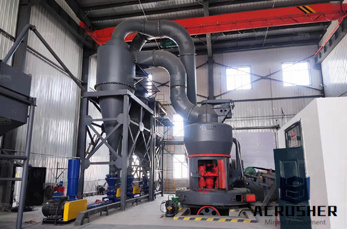
equipments working in coal mines during the industrial revolution,Our company is a largescale heavy enterprise that taking heavy mining machinery manufactory as main products and integrated with scientific research, production, and marketing.
What life was like for children who worked in the mines during the Industrial Revolution. Huge amounts of coal were needed and children as young as five worked at jobs that were dangerous and ...
Jun 08, 2016· Coal was king of the British Industrial Revolution. As coke, it provided an efficient fuel for reliably turning iron ore into iron. Cheap iron built the famous bridge across the River Severn at ...
According to the same source, coal mines became prevalent in ia, Pennsylvania and other locations in the northern United States in the 1830s. Coal mining became big business during the Industrial Revolution because of the large amounts of coal needed to power the steam engines.
the Industrial Revolution. But the partisans of coal as the key transformative element of the Industrial Revolution have not conceded, and in recent accounts of the Industrial Revolution, most noticeably in the work of E. A. Wrigley and Kenneth Pomeranz, coal .
Dec 28, 2018· At the beginning of the Industrial Revolution, few laws existed to protect children from the harsh, and sometimes deadly, working conditions. Children were the ideal employee for working on the streets, factories, coal mines or domestic because .
The steamengine was invented, which could do more work than men or animals, and canals and railways were built, to transport goods and materials for manufacturing. The Industrial Revolution created a huge demand for coal, to power new machines such as the steamengine. In 1750, Britain was producing million tons of coal per year.
Following the invention of the steam engine, demand for coal rocketed throughout Britain. Although the use of coal did exist before the industrial revolution this tended to be on small scale operations and it was from mines near to the surface. Industrialisation brought advancements in technology and a combination of inventions and the influx of .
WhatsApp)